
What are the early warning signs of Uterine cancer?
The early warning signs of uterine cancer (also known as endometrial cancer) may include:
- Abnormal vaginal bleeding or discharge: This may include bleeding between periods, bleeding after menopause, or unusually heavy or prolonged periods.
- Pelvic pain or discomfort: This may include pain during sex, pain during urination, or pain in the lower abdomen or pelvic area.
- Changes in bowel habits: This may include constipation or diarrhea that lasts for more than a few days.
- Weight loss: This may occur without any changes in diet or exercise.
- Fatigue or weakness: This may occur even with adequate rest.
What is the main cause of Uterine cancer?
The exact cause of uterine cancer is not fully understood, but there are certain factors that may increase a person’s risk of developing this type of cancer. The main cause of uterine cancer is an abnormal growth of cells in the lining of the uterus (endometrium).
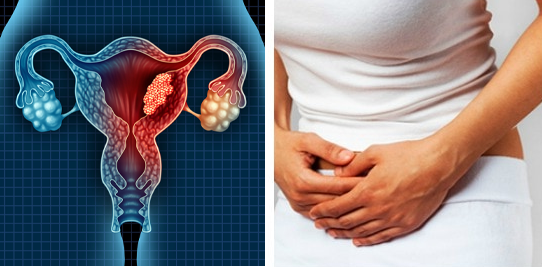
This abnormal growth can lead to the formation of a tumor that can become cancerous over time. Some factors that may increase the risk of uterine cancer include:
- Hormonal imbalances: High levels of estrogen in the body can increase the risk of uterine cancer.
- Obesity: Being overweight or obese can increase the risk of uterine cancer.
- Age: The risk of uterine cancer increases with age, especially after menopause.
- Family history: Having a close relative, such as a mother or sister, with uterine cancer may increase the risk of developing the disease.
- Certain medical conditions: Having a history of endometrial hyperplasia (an overgrowth of the uterine lining) or having had radiation therapy to the pelvis may increase the risk of uterine cancer.
Is uterine cancer cancer more common than cervical cancer?
Uterine cancer is more common than cervical than cervical, ovarian, vulvar, vaginal and fallopian tube cancer. In fact, uterine cancer is the fourth most common cancer among women in the United States, while cervical cancer is the 14th most common.
According to the American Cancer Society, an estimated 66,570 new cases of uterine cancer will be diagnosed in the US in 2021, while an estimated 14,480 new cases of cervical cancer will be diagnosed in the same period.
What are the 4 phases of Uterine cancer?
The most commonly used staging system for uterine cancer is the FIGO system, which stands for the International Federation of Gynecology and Obstetrics.
The stages of uterine cancer are as follows:
Stage I: The cancer is limited to the uterus and has not spread to other parts of the body. Stage I is further divided into Stage IA and Stage IB, depending on the depth of the cancerous tissue in the uterus.
Stage II: The cancer has spread from the uterus to the cervix, but has not yet spread to other parts of the body.
Stage III: The cancer has spread outside the uterus and cervix to nearby organs, such as the ovaries, fallopian tubes, vagina, or lymph nodes.
Stage IV: The cancer has spread to distant organs, such as the lungs, liver, bones, or brain.
In addition to the FIGO system, uterine cancer can also be classified based on the grade of the tumor, which reflects how abnormal the cancerous cells look under a microscope.
Treatment for Uterine cancer?
The most common treatments for uterine cancer include:
- Surgery: Surgery is usually the first-line treatment for uterine cancer. The goal is to remove the uterus and cervix (hysterectomy) along with the surrounding tissues and lymph nodes. In some cases, the ovaries and fallopian tubes may also be removed. The type of surgery performed depends on the stage and extent of the cancer.
- Radiation therapy: Radiation therapy uses high-energy X-rays to kill cancer cells. It can be used alone or in combination with surgery or chemotherapy.
- Chemotherapy: Chemotherapy uses drugs to kill cancer cells. It can be used alone or in combination with surgery or radiation therapy.
- Hormone therapy: Hormone therapy is used to treat uterine cancers that are hormone-sensitive. It involves the use of drugs that block the production of estrogen or progesterone, which can fuel the growth of certain types of uterine cancer.
What is the survival rate of Uterine cancer?

According to the American Cancer Society, the five-year survival rates for uterine cancer are:
- Localized (cancer is confined to the uterus): About 95% of women will survive for at least five years after diagnosis.
- Regional (cancer has spread to nearby organs or lymph nodes): The five-year survival rate is about 69%.
- Distant (cancer has spread to distant parts of the body): The five-year survival rate is about 17%.
Pain medication for Uterine cancer
Some commonly used pain medications for uterine cancer are:
- Nonsteroidal anti-inflammatory drugs (NSAIDs): NSAIDs such as ibuprofen, naproxen, and aspirin are commonly used to manage mild to moderate pain associated with uterine cancer. These medications reduce inflammation, pain, and fever.
- Opioids: Opioids such as morphine, fentanyl, and oxycodone are used to manage severe pain associated with uterine cancer. These medications bind to opioid receptors in the brain, spinal cord, and other parts of the body to block the sensation of pain.
- Adjuvant medications: Adjuvant medications such as antidepressants and anticonvulsants can be used along with other pain medications to manage neuropathic pain associated with uterine cancer.