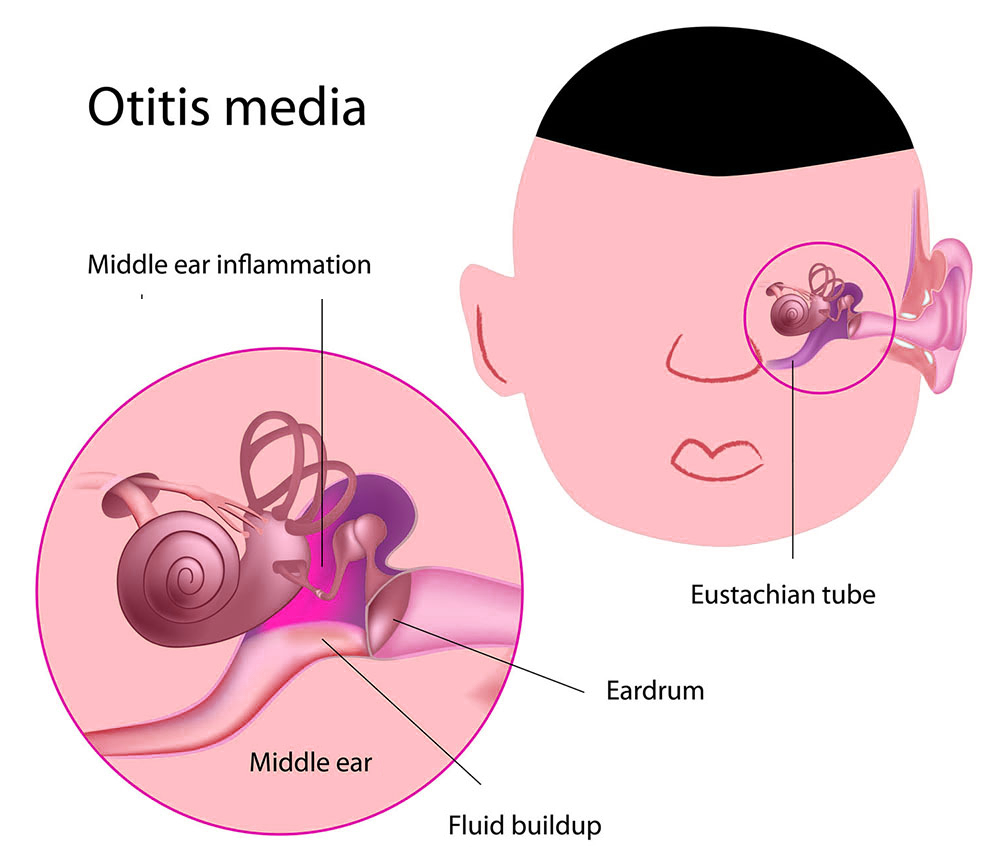
The symptoms of a middle ear infection can vary from person to person, but commonly include:
Pain in the ear: This is the most common symptom of a middle ear infection. The pain can be severe and may worsen when lying down.
Fever: A fever is a sign that your body is fighting an infection. A high fever may indicate a more severe infection.
Difficulty hearing: The buildup of fluid in the middle ear can affect hearing and make it difficult to hear sounds clearly.
Fluid drainage from the ear: A middle ear infection may cause pus or fluid to drain from the ear.
Feeling of pressure in the ear: You may feel a sense of fullness or pressure in the ear due to the accumulation of fluid.
Loss of balance: In some cases, a middle ear infection can affect your balance and make you feel dizzy or unsteady.
Causes of middle ear infection
A middle ear infection, also known as otitis media, is typically caused by a bacterial or viral infection. However, there are several other factors that can contribute to the development of a middle ear infection. Some of the common causes of middle ear infection include:
Blocked Eustachian tubes: The Eustachian tubes connect the middle ear to the back of the throat. If these tubes become blocked due to congestion from a cold or allergies, the trapped fluid can become infected.
Enlarged adenoids: Adenoids are glands located in the back of the nasal cavity that help fight infection. If they become enlarged, they can block the Eustachian tubes, which can lead to a middle ear infection.
Allergies: Allergic reactions can cause inflammation and swelling of the nasal passages and Eustachian tubes, making it more difficult for fluid to drain from the middle ear.
Smoking: Exposure to secondhand smoke can irritate the Eustachian tubes, making them more susceptible to infection.
Genetic predisposition: Some people may be genetically predisposed to developing middle ear infections due to the shape or structure of their ear canals.
Weakened immune system: People with weakened immune systems, such as those with HIV/AIDS or undergoing chemotherapy, may be more susceptible to developing middle ear infections.
Diagnosis
To diagnose a middle ear infection, a healthcare professional will perform a physical examination and evaluate the symptoms. They may also perform one or more of the following tests:
Otoscope exam: This involves using a special instrument called an otoscope to examine the ear canal and eardrum for signs of infection, such as redness, swelling, or fluid buildup.
Hearing test: A hearing test may be conducted to assess the extent of hearing loss or to identify any other potential hearing problems.
Tympanometry: This is a test that measures the movement of the eardrum in response to changes in air pressure. It can help identify fluid buildup in the middle ear.
CT scan or MRI: In some cases, imaging tests may be necessary to evaluate the severity of the infection or to identify any other underlying structural issues.
It’s important to seek medical attention if you suspect that you or someone you know has a middle ear infection. A healthcare professional can provide an accurate diagnosis and recommend appropriate treatment options.
Medications for ear infection
The treatment for a middle ear infection typically involves medications that can help alleviate symptoms and fight the underlying infection. The type of medication prescribed will depend on the severity of the infection and the individual’s medical history. Some common medications used to treat middle ear infections include:
Pain relievers: Over-the-counter pain relievers such as acetaminophen or ibuprofen can help alleviate the pain and discomfort associated with a middle ear infection.
Decongestants: Decongestant medications can help reduce nasal congestion and promote drainage of fluid from the middle ear.
Antihistamines: If the infection is caused by allergies, antihistamine medications can help reduce inflammation and swelling of the nasal passages and Eustachian tubes.
Ear drops: Prescription ear drops may be used to alleviate pain and inflammation in the ear canal.
Antibiotics: If the infection is caused by bacteria, a course of antibiotics may be prescribed to fight the infection :
Augmentin (amoxicillin/clavulanate): This is a combination antibiotic that is often used for more severe or complicated middle ear infections.
Cefuroxime: This is a second-generation cephalosporin antibiotic that may be used in patients who are allergic to penicillin.
Azithromycin: This is a macrolide antibiotic that may be used for patients who are unable to take amoxicillin or have a penicillin allergy.
Clarithromycin: This is another macrolide antibiotic that may be used in patients with a penicillin allergy.
Home treatments for middle ear infection
In addition to medical treatment, there are several home remedies that can help alleviate the symptoms of a middle ear infection. Some common home treatments for middle ear infections include:
Applying a warm compress: Placing a warm, damp cloth over the affected ear can help reduce pain and inflammation. Be sure the compress is warm, not hot, to avoid burns.
Using over-the-counter pain relievers: Over-the-counter pain relievers such as acetaminophen or ibuprofen can help alleviate pain and discomfort associated with a middle ear infection. Always follow the dosing instructions on the label.
Rest and hydration: Getting plenty of rest and staying hydrated can help boost the immune system and aid in the recovery process.
Using over-the-counter decongestants: Over-the-counter decongestants such as nasal sprays or oral medications can help reduce nasal congestion and promote drainage of fluid from the middle ear.
Avoiding irritants: Exposure to smoke, dust, or other irritants can exacerbate the symptoms of a middle ear infection. Avoiding these irritants can help reduce inflammation and promote healing.
There are several plants that are commonly used to treat middle ear infections. Here are a few:
Garlic: Garlic is a natural antibiotic and can be very effective in treating ear infections. Crush a few cloves of garlic and mix them with a few drops of olive oil. Warm the mixture and then use a dropper to put a few drops in the infected ear.
Mullein: Mullein has anti-inflammatory properties that can help reduce pain and inflammation associated with ear infections. Make an oil infusion by steeping dried mullein flowers in olive oil for several weeks. Strain the oil and apply a few drops to the infected ear.
Holy Basil: Holy basil is another natural antibiotic that can be effective in treating ear infections. Crush a few leaves of holy basil and extract the juice. Use a dropper to put a few drops of the juice in the infected ear.
Tea Tree Oil: Tea tree oil has antiseptic and antimicrobial properties that can help fight infections. Mix a few drops of tea tree oil with a carrier oil, such as olive oil or coconut oil, and use a dropper to put a few drops in the infected ear.
Prevention ear infection
Practice good hygiene: Wash your hands regularly with soap and water. Keep your ears clean and dry.
Avoid smoking: Smoking can increase your risk of developing ear infections.
Avoid exposure to pollutants: Exposure to pollutants such as dust, pollen, and pet dander can irritate the nasal passages and lead to ear infections.
Breastfeed your baby: Breastfeeding helps to boost the immune system of babies and reduces the risk of ear infections.
Vaccinate: Make sure you and your child are up-to-date on vaccinations, including the pneumococcal and influenza vaccines.
Avoid sharing personal items: Avoid sharing items such as earbuds or headphones, which can introduce bacteria into the ear canal.
Manage allergies: Allergies can lead to inflammation and blockages in the nasal passages, which can increase the risk of ear infections. Talk to your doctor about managing your allergies.
Stay away from sick people: Avoid close contact with people who have colds or other respiratory infections, as these can increase your risk of developing an ear infection.