
What are the 12 early warning Symptoms of stomach cancer?
Here are twelve early warning signs and symptoms of stomach (gastric) cancer:
- Abdominal pain or discomfort
- Indigestion or heartburn
- Nausea and vomiting
- Loss of appetite
- Feeling full after eating small amounts
- Unintentional weight loss
- Fatigue or weakness
- Difficulty swallowing or feeling like food is getting stuck in the throat
- Blood in the stool or black, tarry stools
- Vomiting blood or having blood in vomit
- Anemia (low red blood cell count) which can cause fatigue, shortness of breath, and pale skin
- Jaundice (yellowing of the skin and eyes)
It’s important to note that these symptoms may also be caused by other conditions, and having one or more of these symptoms does not necessarily mean that a person has stomach cancer.
What is the main cause of stomach cancer?
Stomach cancer, also known as gastric cancer, is a type of cancer that begins in the stomach lining. Unfortunately, early-stage stomach cancer often doesn’t cause any noticeable symptoms. As the cancer grows, however, the following signs and symptoms may appear:
- Abdominal pain or discomfort: Persistent pain or discomfort in the abdomen, especially in the upper part, may be a warning sign of stomach cancer.
- Feeling full or bloated after eating: If you feel full or bloated after eating even small amounts of food, it could be a sign of stomach cancer.
- Nausea and vomiting: Feeling sick to your stomach or vomiting can be an early warning sign of stomach cancer.
- Unexplained weight loss: If you’re losing weight without trying, it could be a sign of stomach cancer.
- Loss of appetite: A decrease in appetite may be an early sign of stomach cancer.
- Difficulty swallowing: Difficulty swallowing, or dysphagia, can be a sign of stomach cancer.
- Blood in your stool: Stomach cancer can cause bleeding in the stomach and intestines, which may lead to blood in your stool.
It’s important to note that these symptoms can also be caused by many other conditions that are not cancer, so having one or more of these symptoms does not necessarily mean you have stomach cancer. However, if you are experiencing any of these symptoms, it’s important to talk to your doctor to determine the cause and rule out the possibility of cancer.
Can Stomach Cancer Be Prevented?

there are certain lifestyle changes and strategies that can help reduce the risk of developing the disease. Here are some ways to potentially lower the risk of stomach cancer:
- Eat a healthy diet: A diet rich in fruits, vegetables, whole grains, lean proteins, and low in processed foods and red meat may help reduce the risk of stomach cancer.
- Quit smoking: Smoking is a known risk factor for several types of cancer, including stomach cancer. Quitting smoking may help reduce the risk of developing the disease.
- Limit alcohol consumption: Drinking alcohol in moderation or not at all may help reduce the risk of stomach cancer.
- Practice food safety: Proper food handling and storage can help prevent infections with Helicobacter pylori (H. pylori), a bacterium that can increase the risk of developing stomach cancer.
- Treat H. pylori infection: If diagnosed with H. pylori infection, antibiotics and acid-reducing medications can help eliminate the bacteria and potentially lower the risk of developing stomach cancer.
- Regular check-ups and cancer screenings: Regular check-ups and cancer screenings can help detect stomach cancer at an early stage when it is more treatable.
Is stomach cancer usually fatal?
Stomach (Gastric) cancer can be a serious and potentially life-threatening condition, but the prognosis and outcome depend on several factors, including the stage and type of cancer, the patient’s age and overall health, and the treatment options available.
Unfortunately, stomach cancer is often diagnosed at an advanced stage when it has spread to other parts of the body, making it more difficult to treat and reducing the chances of survival. According to the American Cancer Society, the 5-year survival rate for all stages of stomach cancer is about 31%. However, if the cancer is caught at an early stage before it has spread, the 5-year survival rate is much higher, around 68%.
It’s important to note that survival rates are based on large groups of people and may not predict the outcome for any individual patient.
What are the 4 stages of Gastric Cancer?
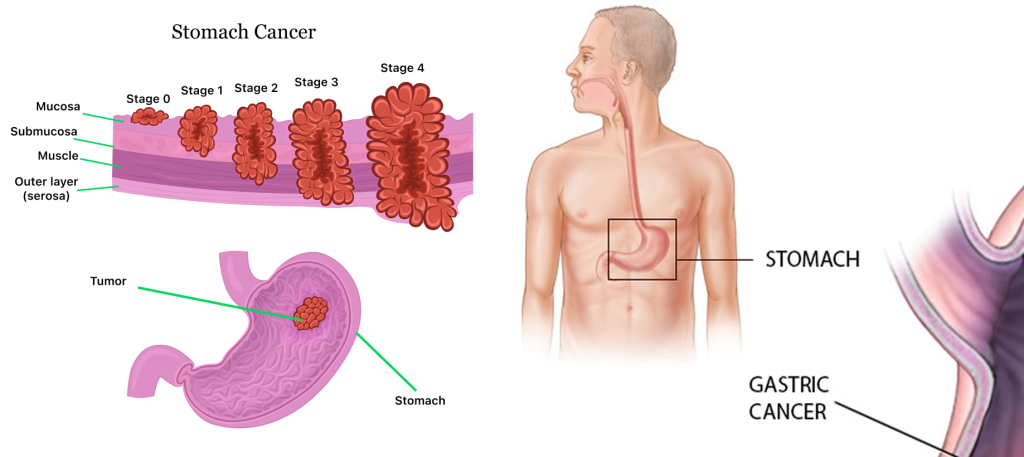
The most commonly used staging system for gastric cancer is called the TNM system, which stands for Tumor, Node, and Metastasis. The stages of gastric cancer are:
Stage 0: The cancer is in the very early stage and is only found in the inner lining of the stomach. It has not spread to nearby lymph nodes or other parts of the body.
Stage I: The cancer has grown deeper into the layers of the stomach wall but has not spread beyond the stomach or to nearby lymph nodes.
Stage II: The cancer has spread beyond the inner layers of the stomach to the outer layers, and may have spread to nearby lymph nodes.
Stage III: The cancer has spread to nearby lymph nodes and may have invaded nearby organs, such as the spleen, pancreas, or colon.
Stage IV: The cancer has spread to distant parts of the body, such as the liver, lungs, or bones.
In addition to the TNM system, gastric cancer can also be classified into different subtypes based on the histological features of the tumor, such as the location and type of the cancer cells.
Treatment for stomach (Gastric ) cancer?
Treatment options may include surgery, radiation therapy, chemotherapy, targeted therapy, and immunotherapy. In some cases, a combination of these treatments may be used.
here is a list of treatments for stomach (gastric) cancer:
- Surgery: the main treatment for stomach cancer, which involves removing part or all of the stomach, nearby lymph nodes, and other affected tissues.
- Radiation therapy: the use of high-energy X-rays or other types of radiation to kill cancer cells. It can be used before or after surgery to destroy cancer cells or relieve symptoms.
- Chemotherapy: the use of drugs to kill cancer cells throughout the body. It can be given before or after surgery, or to relieve symptoms.
- Targeted therapy: the use of drugs that target specific molecules or proteins involved in the growth and spread of cancer cells. It can be used alone or in combination with chemotherapy.
- Immunotherapy: the use of drugs that help the immune system to recognize and attack cancer cells. It is a newer type of treatment and is currently being studied in clinical trials for stomach cancer.
- Palliative care: supportive care to manage symptoms and improve quality of life, which may be used at any stage of cancer treatment.
Pain medication for gastric cancer
Here are some examples of pain medications that may be used to manage pain associated with gastric cancer:
- Nonsteroidal anti-inflammatory drugs (NSAIDs): These are over-the-counter pain relievers such as aspirin, ibuprofen, or naproxen. They may be effective for mild pain, but prolonged use can cause gastrointestinal side effects.
- Acetaminophen: Also known as paracetamol, this is another over-the-counter pain reliever that can be effective for mild to moderate pain.
- Opioids: These are stronger pain medications that are used for moderate to severe pain. Examples include morphine, fentanyl, oxycodone, and hydrocodone. Opioids can cause side effects such as constipation, nausea, vomiting, and drowsiness.
- Adjuvant medications: These are medications that can be used in combination with pain relievers to enhance their effectiveness or reduce side effects. Examples include antidepressants, anticonvulsants, and corticosteroids.
Nutrition and stomach cancer

Eating a healthy, well-balanced diet can help support overall health and well-being, improve energy levels, and manage side effects of cancer treatment. Here are some key nutrition considerations for patients with stomach cancer:
- Focus on nutrient-dense foods: Choose foods that are high in nutrients and low in calories, such as fruits, vegetables, whole grains, lean proteins, and low-fat dairy products.
- Stay hydrated: Drinking enough water and other fluids can help prevent dehydration, especially if experiencing diarrhea or vomiting.
- Avoid spicy, acidic, or fried foods: These foods can irritate the stomach lining and exacerbate digestive symptoms, such as nausea, vomiting, and indigestion.
- Manage side effects: Work with a healthcare provider or registered dietitian to manage side effects of cancer treatment, such as loss of appetite, weight loss, or taste changes.
- Consider nutritional supplements: Nutritional supplements, such as protein powders or liquid meal replacements, may be recommended to ensure adequate nutrition and prevent malnutrition.