
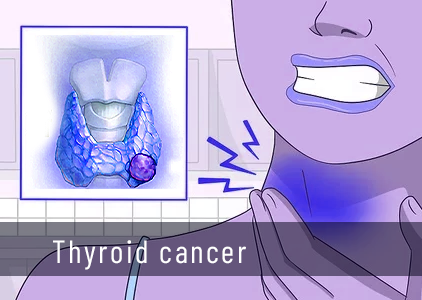
What are 9 cancer early warning signs of Thyroid cancer?
Thyroid cancer is a type of cancer that develops in the thyroid gland, which is located in the neck. Here are nine possible early warning signs of thyroid cancer:
- A lump or swelling in the neck: This is the most common symptom of thyroid cancer, and it may be painless or painful.
- Changes in voice: Thyroid cancer can affect the vocal cords and cause hoarseness or a change in the voice.
- Difficulty swallowing: This may include a feeling of something stuck in the throat or pain when swallowing.
- Neck pain: Some people with thyroid cancer may experience pain or discomfort in their neck, especially when swallowing or turning their head.
- Enlarged lymph nodes: Thyroid cancer can cause the lymph nodes in the neck to become enlarged and tender.
- Fatigue: Some people with thyroid cancer may feel extremely tired or weak, even if they have rested.
- Weight loss: Unexplained weight loss can be a symptom of thyroid cancer, especially if it is accompanied by other symptoms.
- Increased appetite: Some people with thyroid cancer may experience an increase in appetite and/or thirst.
- Changes in menstrual cycle: Women with thyroid cancer may experience irregular periods or changes in their menstrual cycle.
It’s important to note that many of these symptoms can also be caused by other conditions, and having one or more of these symptoms does not necessarily mean that you have thyroid cancer.
What is the main cause of Thyroid cancer?
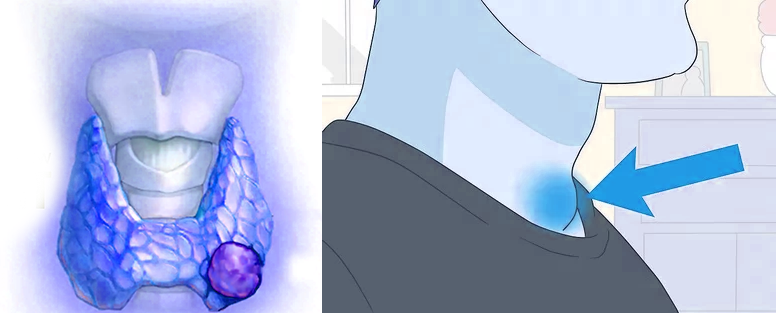
The exact cause of thyroid cancer is not fully understood, but it is believed to be the result of changes (mutations) in the DNA of thyroid cells that cause them to grow and divide abnormally. These mutations can lead to the development of a tumor in the thyroid gland, which can become cancerous and spread to other parts of the body.
There are several risk factors that can increase a person’s likelihood of developing thyroid cancer. Some of the main risk factors for thyroid cancer include:
- Exposure to ionizing radiation, especially during childhood or adolescence, is a well-known risk factor for thyroid cancer. Radiation exposure can come from various sources such as medical treatments, nuclear fallout, and workplace exposure.
- Family history of thyroid cancer or other related conditions such as goiter or thyroid nodules can increase the risk of developing the disease. Certain genetic mutations, such as those associated with familial medullary thyroid cancer or multiple endocrine neoplasia, can also increase the risk of developing thyroid cancer.
- Age is also a factor, as thyroid cancer is more common in people over the age of 40.
- Gender is another factor, as thyroid cancer is more common in women than men.
- Certain thyroid conditions, such as goiter or Hashimoto’s thyroiditis, can increase the risk of developing thyroid cancer.
- Exposure to environmental toxins such as pesticides, chemicals, or pollutants may also increase the risk of thyroid cancer.
What are the 4 stages of Thyroid cancer?
The stages of thyroid cancer are typically determined using the TNM system, which stands for tumor size and invasion, lymph node involvement, and distant metastasis.
The stages of thyroid cancer are as follows:
- Stage I: The tumor is limited to the thyroid gland and is 2 centimeters or smaller in size.
- Stage II: The tumor is larger than 2 centimeters but is still confined to the thyroid gland.
- Stage III: The tumor has grown outside of the thyroid gland and has invaded nearby tissues, such as the trachea, esophagus, or nerve pathways.
- Stage IV: The cancer has spread to nearby lymph nodes, other parts of the body, or both.
Each stage may be further classified as « A » or « B, » depending on the presence or absence of certain symptoms or features. For example, in the TNM system, the presence of distant metastasis is classified as « M1, » whereas the absence of distant metastasis is classified as « M0. »
Thyroid cancer Treatment
Treatment options may include:
- Surgery: The main treatment for thyroid cancer is surgery to remove the thyroid gland (thyroidectomy) and any cancerous lymph nodes in the neck. Depending on the extent of the cancer, a partial or complete thyroidectomy may be performed.
- Radioactive iodine therapy: This treatment involves taking a pill containing radioactive iodine, which is absorbed by any remaining thyroid tissue and thyroid cancer cells. The radiation destroys the cancer cells and any normal thyroid tissue.
- External radiation therapy: This treatment uses high-energy X-rays to destroy cancer cells. It may be used after surgery if there is a risk of cancer recurrence, or if the cancer has spread to other parts of the body.
- Chemotherapy: This treatment uses drugs to destroy cancer cells. It is rarely used for thyroid cancer but may be an option if the cancer has spread to other parts of the body.
- Targeted therapy: This treatment uses drugs that target specific proteins or genes in cancer cells to stop their growth and spread. It is typically used for advanced thyroid cancer that has spread to other parts of the body.
- Clinical trials: New treatments for thyroid cancer are being developed and tested through clinical trials. Participation in a clinical trial may be an option for some people with thyroid cancer.
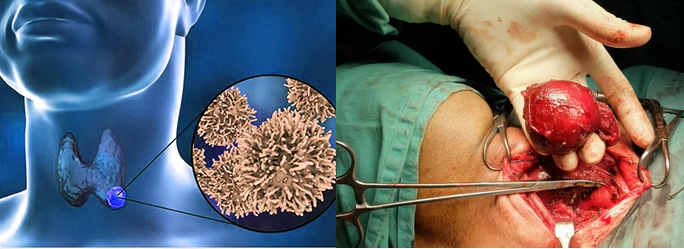
After treatment, regular follow-up appointments with a healthcare provider are important to monitor for any signs of cancer recurrence and manage any side effects of treatment. In general, the prognosis for thyroid cancer is good, especially if it is detected and treated early.
What is life expectancy after Thyroid cancer?

The good news is that most people with thyroid cancer have a very good prognosis and can expect to live a long and healthy life. The overall 5-year survival rate for thyroid cancer is around 98%, meaning that 98% of people diagnosed with thyroid cancer are still alive 5 years after their diagnosis.
However, it is important to note that survival rates vary depending on the stage and type of thyroid cancer. For instance, the 5-year survival rate for papillary thyroid cancer, which is the most common type of thyroid cancer, is over 95% for most stages.
In contrast, the 5-year survival rate for anaplastic thyroid cancer, which is a rare and aggressive type of thyroid cancer, is much lower, with only around 7% of people surviving for 5 years after their diagnosis.
Fruits and vegetables may reduce breast cancer risk

Fruits and vegetables are high in antioxidants and other nutrients that can help protect cells from damage and inflammation, which are key drivers of cancer development. They also contain fiber, which has been linked to a lower risk of breast cancer.
Studies have found that women who consume a high intake of fruits and vegetables have a lower risk of breast cancer than those who consume a low intake. For example, a large meta-analysis of 20 studies found that women who consumed the highest levels of fruits and vegetables had a 15% lower risk of breast cancer compared to those who consumed the lowest levels.
In addition, specific types of fruits and vegetables may offer additional protection against breast cancer. For instance, cruciferous vegetables, such as broccoli and kale, have been shown to contain compounds that may help to reduce breast cancer risk. Similarly, berries, such as strawberries and blueberries, are rich in antioxidants that may help to prevent the development of breast cancer.
Pain medication for Thyroid cancer
For mild to moderate pain, over-the-counter pain relievers such as acetaminophen (Tylenol) or nonsteroidal anti-inflammatory drugs (NSAIDs) like ibuprofen (Advil, Motrin) may be recommended.
For more severe pain, prescription pain medications such as opioids may be prescribed. Examples of opioids include morphine, oxycodone, and fentanyl.
However, it is important to note that opioids have potential risks and side effects, including the risk of addiction, drowsiness, constipation, and respiratory depression. Therefore, they should be used only under the guidance of a healthcare provider and at the lowest effective dose for the shortest duration necessary to manage pain.
Other medications, such as steroids or antidepressants, may also be used to manage pain related to thyroid cancer, depending on the cause and type of pain.