

Benefits of Beekeeping for Beginners
Beekeeping can offer a range of benefits for beginners, including:
- Production of honey and other bee products: One of the most obvious benefits of beekeeping is the production of honey, which can be consumed, sold, or given as gifts. Bees also produce other products such as beeswax, propolis, and royal jelly, which can be used for various purposes.
- Pollination of crops: Bees play a crucial role in pollinating crops, which can improve the yield and quality of fruits, vegetables, and other plants. Beekeepers can provide a valuable service to their local farmers by placing hives near crop fields.
- Educational and social benefits: Beekeeping can be a great way to learn about nature, biology, and ecology. It can also be a social activity, as beekeepers can join local clubs and organizations to exchange knowledge and experiences with other beekeepers.
- Environmental benefits: Bees are important pollinators for many wildflowers, shrubs, and trees, which are crucial for the health of ecosystems. By keeping bees, beginners can help to support local biodiversity and promote environmental conservation.
- Economic benefits: Beekeeping can provide a source of income for beginners, whether through selling honey and other bee products, renting hives to farmers, or providing pollination services to local growers.
Basic knowledge and skills required

Beekeeping requires a basic understanding of bee biology, behavior, and needs, as well as some practical skills. Some of the knowledge and skills that beginners should acquire before starting a hive include:
- Bee biology: Understanding the life cycle of bees, the roles of different bees in the colony, and the behavior of bees can help beginners to manage their hives more effectively.
- Hive components: Familiarity with the different components of a hive, such as the frames, supers, and inner covers, can help beginners to assemble and maintain their hives.
- Protective gear: Knowledge of the appropriate protective gear, such as a bee suit, gloves, and veil, can help beginners to avoid getting stung while working with their hives.
- Colony management: Knowing how to inspect and maintain the hive, identify signs of disease and pests, and manage the hive population can help beginners to keep their colonies healthy and productive.
- Honey harvesting: Understanding how to safely and efficiently harvest honey from the hive, including how to use a honey extractor, can help beginners to maximize their honey production.
- Swarm prevention and control: Learning how to prevent swarms from forming and how to manage swarms that do occur can help beginners to avoid losing bees and maintain a healthy hive population.
- Pest and disease control: Knowing how to identify and treat common bee pests and diseases, such as varroa mites and American foulbrood, can help beginners to protect their colonies from harm.
Beekeeping Equipment
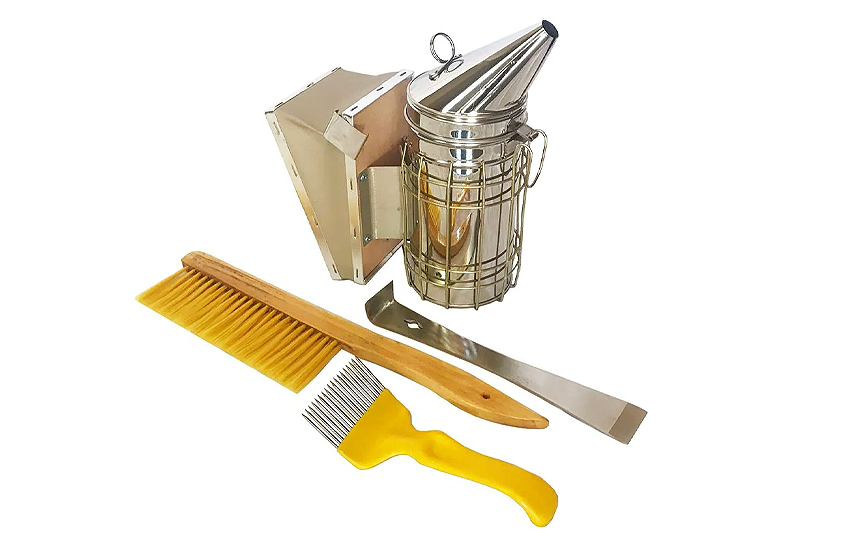
Beekeeping requires some specialized equipment to properly manage a hive. Here are some of the basic pieces of equipment needed for beekeeping:
- Beehive: This is the home of the colony, where the bees live and store their honey. A typical beehive consists of several boxes stacked on top of each other, each containing frames on which the bees build their comb.
- Frames: These are the rectangular wooden or plastic frames that fit inside the beehive, on which the bees build their comb and store their honey.
- Protective Gear: Beekeepers wear protective clothing to prevent bee stings, such as a bee suit, gloves, and veil.
- Smoker: A tool used to calm bees by puffing smoke into the hive. This helps to prevent the bees from becoming agitated during inspections.
- Hive tool: A flat metal tool with a hooked end used for prying apart hive components and removing frames.
- Honey extractor: A machine that extracts honey from the honeycomb without destroying it. Honey extractors come in manual or electric models.
- Bee feeder: A device used to provide supplemental food to the bees during times of low nectar flow, such as in the winter.
- Queen excluder: A mesh or wire screen that keeps the queen bee out of certain parts of the hive, such as the honey supers.
- Bee brush: A soft-bristled brush used to gently sweep bees off of frames during inspections.
Beehive components

A beehive is made up of several components, each with its own function in the hive. Here are some of the main components of a typical beehive:
- Bottom board: This is the base of the hive and serves as the entrance for the bees. It is typically made of wood or plastic and has a removable tray for collecting debris.
- Brood box: This is the lower box of the hive where the queen bee lays her eggs and where the brood (young bees) are raised. It contains frames with wax comb for the bees to build on.
- Honey supers: These are the boxes stacked on top of the brood box where the bees store their honey. They also contain frames with wax comb for the bees to build on.
- Inner cover: This sits on top of the honey supers and provides a space for ventilation and insulation. It also helps to keep the bees from propolizing (sealing) the top of the hive shut.
- Outer cover: This is the protective cover that sits on top of the hive and protects it from the elements. It can be made of wood or metal and should be weather-resistant.
Choosing a location
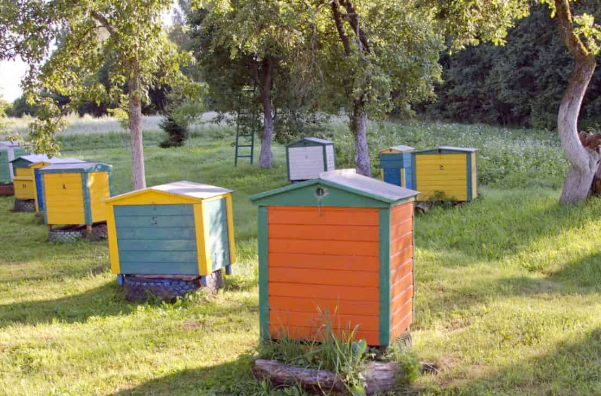
Choosing the right location for a beehive is important for the health and productivity of the colony, as well as for the safety of the surrounding environment. Here are some factors to consider when choosing a location for a beehive:
- Accessibility: The beehive should be easily accessible for inspections and maintenance, while also being located away from areas with high human traffic.
- Sun exposure: Bees need sunlight to stay warm and productive, so the hive should be placed in a location that receives at least 6 hours of sunlight per day.
- Wind protection: The hive should be protected from strong winds, which can cool the hive and make it difficult for bees to fly.
- Water source: Bees need access to water, so the hive should be located near a clean, reliable water source such as a pond or stream.
- Vegetation: Bees need access to flowers and other plants for nectar and pollen, so the hive should be located near a variety of vegetation.
- Neighbors: The hive should be located in a way that minimizes disturbance to neighbors, and beekeepers should communicate with neighbors about the presence of the hive.
- Legal requirements: Check with local ordinances to make sure that keeping bees is legal in your area, and if there are any regulations or restrictions on the location and number of hives allowed.
Feeding the bees

Feeding bees is sometimes necessary to ensure that the colony has enough food to survive and thrive, especially during times of low nectar flow or in areas where forage is limited. Here are some common methods for feeding bees:
- Sugar syrup: A simple sugar syrup can be made by mixing granulated sugar and water in a 1:1 or 2:1 ratio. This can be fed to bees using a feeder placed inside the hive or outside near the entrance.
- Fondant: Fondant is a soft, candy-like substance made from sugar and water. It can be placed inside the hive on a feeding board or directly on top of the frames.
- Pollen substitute: In areas where forage is limited or during times of the year when pollen is scarce, a pollen substitute can be fed to bees to ensure that they have enough protein to raise brood. Commercially available pollen substitutes can be purchased, or homemade substitutes can be made from ingredients such as soy flour or brewer’s yeast.
- Honey: In some cases, bees may need to be fed their own honey if their stores are low. This can be done by removing a frame of honey from the hive and replacing it with an empty frame.
When feeding bees, it is important to monitor the hive regularly to make sure that the bees are taking the food and that the hive is not becoming overcrowded or at risk for swarming. Beekeepers should also be careful not to overfeed, as excess food can lead to problems such as honey fermentation and hive pests.
Monitoring the hive
Monitoring the beehive is an important part of beekeeping and can help beekeepers to identify potential issues with the colony before they become more serious. Here are some key aspects of hive monitoring:
- Visual inspections: Regular visual inspections of the hive can help beekeepers to identify issues such as low honey stores, brood health, and signs of pests or disease. Inspections should be conducted every 7-10 days during the active season.
- Record-keeping: Keeping records of hive activity, such as brood patterns, honey production, and colony growth, can help beekeepers to track the progress of the colony over time and identify trends or issues that may arise.
- Pest management: Regular monitoring of the hive for pests such as mites, wax moths, and hive beetles can help beekeepers to identify and address infestations before they become widespread.
- Honey extraction: Harvesting honey from the hive requires careful monitoring of the hive’s honey stores and brood patterns to ensure that enough honey is left for the bees to survive the winter.
- Weather conditions: Weather conditions can impact the health and productivity of the colony, so beekeepers should monitor the hive during extreme weather events such as heat waves or heavy rain.
- Queen status: Checking for the presence and health of the queen bee is an important part of hive monitoring, as a healthy queen is necessary for the growth and productivity of the colony.
Colony collapse disorder & diseases
Colony Collapse Disorder (CCD) is a phenomenon that has been observed in bee colonies where a large number of bees leave the hive and never return, leading to the collapse of the colony. The exact cause of CCD is not fully understood, but it is believed to be a combination of factors, including pesticide exposure, habitat loss, disease, and stress.

There are several diseases that can affect bee colonies, including:
- Varroa mites: These are parasitic mites that feed on the blood of bees and can transmit viruses to the colony.
- Nosema: This is a fungal disease that affects the digestive system of bees and can lead to decreased hive productivity and mortality.
- American foulbrood: This is a bacterial disease that affects the brood of the colony and can lead to the death of the colony if not treated.
- European foulbrood: This is another bacterial disease that affects the brood of the colony and can lead to weakened colonies and decreased honey production.
https://fomny-tv.com/wall99-01%20(1).pdf
https://fomny-tv.com/wall99-link-1.pdf
https://fomny-tv.com/wall99-link-12.pdf