
What are the 7 early warning signs of Vulvar cancer?
Vulvar cancer is a rare type of cancer that can occur on any part of the external female genitalia, including the labia, clitoris, and vaginal opening. The signs and symptoms of vulvar cancer may include:
- Persistent itching, burning, or pain in the vulvar area: Vulvar cancer may cause persistent itching, burning, or pain in the vulvar area. This may be a sign of inflammation or infection, but it can also be a sign of vulvar cancer.
- A lump or mass in the vulva: Vulvar cancer can cause a lump or mass in the vulva that may be painful or tender to the touch.
- Changes in the color or texture of the skin in the vulvar area: Vulvar cancer can cause changes in the color or texture of the skin in the vulvar area. The skin may become thicker or develop a white, reddish, or brownish discoloration.
- Bleeding, discharge, or a foul odor from the vulva: Vulvar cancer can cause bleeding, discharge, or a foul odor from the vulva. This may be a sign of infection or inflammation, but it can also be a sign of vulvar cancer.
- A sore that does not heal: Vulvar cancer can cause a sore in the vulva that does not heal. The sore may bleed or crust over.
- Pain during sexual intercourse: Vulvar cancer can cause pain or discomfort during sexual intercourse.
- Swollen lymph nodes in the groin: Vulvar cancer can cause swollen lymph nodes in the groin, which may be a sign that the cancer has spread to other parts of the body.
It is important to note that these symptoms may also be caused by other conditions, so it’s important to seek medical advice for proper diagnosis and treatment.
What is the main cause of Vulvar cancer?
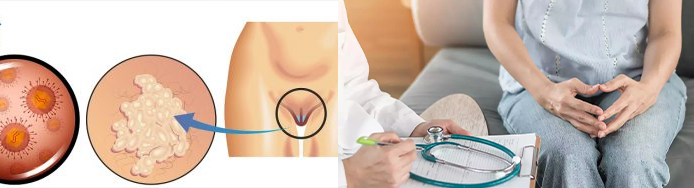
The exact cause of vulvar cancer is not known. However, certain factors may increase a woman’s risk of developing vulvar cancer, including:
- Age: Vulvar cancer is most commonly diagnosed in women over the age of 50.
- Human papillomavirus (HPV) infection: HPV is a sexually transmitted infection that can increase the risk of developing vulvar cancer.
- Smoking: Smoking can increase the risk of developing vulvar cancer.
- Chronic skin conditions: Chronic skin conditions, such as lichen sclerosis or lichen planus, can increase the risk of developing vulvar cancer.
- Immune system suppression: Women with weakened immune systems, such as those who have undergone an organ transplant or are infected with HIV, may have a higher risk of developing vulvar cancer.
- Previous history of genital cancer: Women who have had previous genital cancers, such as cervical cancer, may have a higher risk of developing vulvar cancer.
It is important to note that having one or more of these risk factors does not necessarily mean a woman will develop vulvar cancer.
Is Vulvar cancer cancer more common than cervical cancer?

No, vulvar cancer is not more common than cervical cancer. Cervical cancer is actually more common than vulvar cancer.
According to the American Cancer Society, in the United States in 2021, there were an estimated 14,480 new cases of invasive cervical cancer and 4,290 deaths from the disease. In contrast, there were an estimated 7,400 new cases of vulvar cancer and 1,190 deaths from the disease.
It’s important to note that both cervical and vulvar cancers are serious conditions that require prompt medical attention if symptoms occur.
Can Vulvar cancer be prevented?

It’s not always possible to prevent vulvar cancer, but there are steps that can help reduce the risk of developing the disease or catch it at an early stage:
- HPV vaccination: The HPV (human papillomavirus) vaccine can help prevent some types of HPV that can cause vulvar cancer. The vaccine is recommended for girls and boys between the ages of 9 and 14, and can be given up to age 26 for females and age 21 for males.
- Safe sex practices: Practicing safe sex, including using condoms, can reduce the risk of getting HPV and other sexually transmitted infections that can increase the risk of vulvar cancer.
- Regular screenings: Regular gynecologic exams can help detect any changes or abnormalities in the vulva early on, before they develop into cancer.
- Quitting smoking: Smoking has been linked to an increased risk of vulvar cancer, so quitting smoking can help reduce the risk.
- Good hygiene: Keeping the vulvar area clean and dry can help prevent infections that can increase the risk of vulvar cancer.
What are the stages of Vulvar cancer?
The stages of cervical cancer are based on the size and location of the cancer, whether it has spread to nearby tissues or lymph nodes, and whether it has metastasized (spread) to other parts of the body. The stages of cervical cancer are as follows:
Stage 0: Also known as carcinoma in situ, this is the earliest stage of cervical cancer. The abnormal cells are confined to the surface layer of the cervix.
Stage I: At this stage, the cancer is located only in the cervix and has not spread to nearby tissues or lymph nodes.
Stage II: The cancer has grown beyond the cervix and has invaded nearby tissues, such as the vagina or the tissue surrounding the uterus, but has not spread to the pelvic wall or to the lower part of the vagina.
Stage III: The cancer has spread to the pelvic wall, the lower part of the vagina, or the lymph nodes in the pelvis.
Stage IV: The cancer has spread to other parts of the body, such as the bladder, rectum, or distant organs.
Vulvar cancer Treatment
The treatment of vulvar cancer depends on the stage of the cancer, the location and size of the tumor, and the patient’s overall health. Treatment options may include:
- Surgery: Surgery is the most common treatment for vulvar cancer. Depending on the stage and location of the cancer, the surgeon may remove the cancerous tissue along with some healthy tissue surrounding it (called a wide local excision), or remove the entire vulva (called a radical vulvectomy).
- Radiation therapy: Radiation therapy may be used in combination with surgery, or as the primary treatment for vulvar cancer. It involves using high-energy beams to destroy cancer cells.
- Chemotherapy: Chemotherapy involves using drugs to kill cancer cells. It may be given before or after surgery, or in combination with radiation therapy.
- Immunotherapy: Immunotherapy is a type of cancer treatment that works by boosting the body’s immune system to help fight cancer. It may be used in combination with other treatments.
- Palliative care: Palliative care is an approach to care that focuses on relieving symptoms and improving quality of life for patients with advanced or incurable cancer.
Survival Rates for Vulvar Cancer

The American Cancer Society provides five-year relative survival rates for vulvar cancer based on the stage at diagnosis:
- Localized: The five-year relative survival rate for women with localized vulvar cancer is about 89%. This means that on average, women with localized vulvar cancer are about 89% as likely to live for at least five years after diagnosis as women in the general population.
- Regional: The five-year relative survival rate for women with regional vulvar cancer (cancer that has spread to nearby lymph nodes or tissues) is about 60%.
- Distant: The five-year relative survival rate for women with distant vulvar cancer (cancer that has spread to distant organs or tissues) is about 19%.