
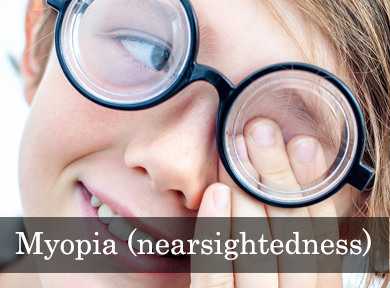
How do you know if you have myopia?
Myopia, also known as nearsightedness, is a common vision problem in which objects up close appear clear, while objects farther away appear blurry. If you’re having difficulty seeing things clearly at a distance, you may have myopia. Here are some common signs and symptoms of myopia:
- Blurry vision when looking at distant objects, such as road signs, the board in a classroom, or a movie screen.
- Squinting to see better at a distance.
- Eye strain or headaches after working on a computer, reading or doing other activities that require intense focus.
- Difficulty seeing at night or in low-light conditions.
- Feeling the need to sit closer to the TV or movie screen to see clearly.

If you experience any of these symptoms, it’s important to schedule an eye exam with an optometrist or ophthalmologist. They can perform a comprehensive eye exam and determine if you have myopia or another vision problem.
What causes myopia to worsen?
The exact cause of myopia is not fully understood, but it is believed to be a combination of genetic and environmental factors. Some factors that can contribute to the progression or worsening of myopia include:
https://doross.ma/alouette1.pdf
- Genetics: If one or both of your parents have myopia, you are more likely to develop it as well.
- Near work: Spending a lot of time doing activities that require intense focus up close, such as reading, studying, using a computer, or playing video games, can cause your eyes to become strained and worsen myopia.
- Lack of outdoor time: Studies have suggested that spending time outdoors, especially in early childhood, may help reduce the risk of myopia progression.
- Age: Myopia typically develops in childhood and tends to stabilize in early adulthood, but it can continue to progress into your 20s and 30s.
- Other health conditions: Certain health conditions, such as diabetes, can increase the risk of myopia progression.
At what age the myopia starts?
Myopia, also known as nearsightedness, can develop at any age, but it usually begins in childhood and adolescence. In most cases, myopia starts to develop between the ages of 6 and 12 years and can progress throughout the teenage years and into early adulthood.
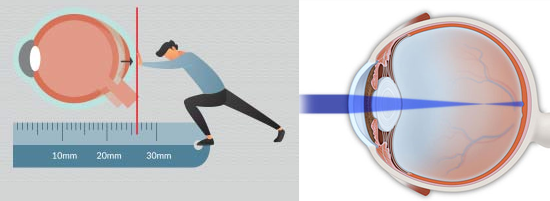
The rate of myopia progression tends to be highest during the teenage years, and the condition usually stabilizes by the time a person reaches their mid-20s. However, in some cases, myopia can continue to progress into adulthood, particularly in people who have high levels of myopia or who have a family history of the condition.
It’s important to have regular eye exams, particularly for children and teenagers, to detect any signs of myopia and to take steps to manage the condition to prevent or slow down its progression.
Astigmatism vs. Myopia: What’s the Difference?
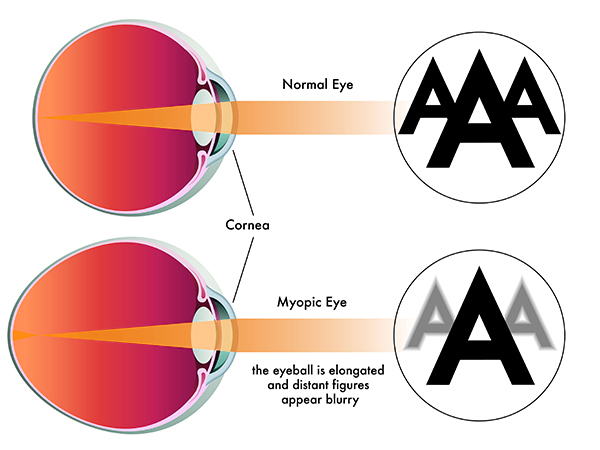
Astigmatism and myopia are two different types of refractive errors that can affect a person’s vision, but they are not the same condition. Here is an overview of the key differences between astigmatism and myopia:
- Myopia, also known as nearsightedness, is a refractive error that makes it difficult to see distant objects clearly. People with myopia can see nearby objects clearly but may experience blurry vision when looking at objects in the distance.
- Astigmatism is a refractive error that occurs when the cornea, the clear front surface of the eye, is irregularly shaped. This causes light to focus on more than one point on the retina, resulting in blurry or distorted vision at all distances.
- Both myopia and astigmatism can cause blurred vision, eye strain, and headaches, but they affect vision in different ways. Myopia makes it difficult to see distant objects, while astigmatism causes blurry vision at all distances.
- Both conditions can be corrected with glasses or contact lenses, and in some cases, refractive surgery.
How is laser treatment done for myopia?
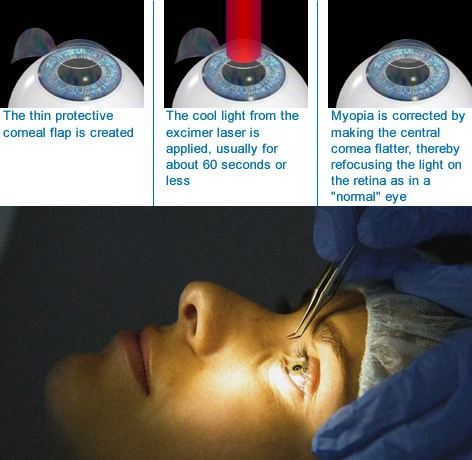
Laser treatment, also known as laser-assisted in situ keratomileusis (LASIK), is a surgical procedure that can be used to treat myopia (nearsightedness), among other vision problems. Here’s a general overview of how LASIK is performed for myopia:
- Consultation: Before the procedure, you will have a consultation with an eye doctor to determine if you are a good candidate for LASIK. The doctor will evaluate your eye health, measure your eye prescription, and discuss the potential risks and benefits of the procedure.
- Preparation: On the day of the procedure, you will be given eye drops to numb the eye and a device will be placed over the eye to keep it open.
- Flap creation: A thin flap is created on the surface of the cornea using a microkeratome or femtosecond laser. The flap is then lifted to expose the underlying corneal tissue.
- Reshaping the cornea: A cool, ultraviolet laser is then used to remove a precise amount of corneal tissue, based on the specific prescription of the patient’s eye. The laser reshapes the cornea to correct the nearsightedness.
- Replacing the flap: Once the cornea has been reshaped, the flap is gently repositioned over the cornea, where it adheres without the need for stitches.
- Post-operative care: Following the procedure, you will need to take medications and follow specific instructions to promote healing and minimize the risk of infection. Most people can resume their normal activities within a few days, but it may take several weeks for the vision to fully stabilize.
While LASIK can be an effective way to correct myopia, it is important to note that it is not appropriate for everyone, and there are risks associated with the procedure. It’s important to have a thorough consultation with a qualified eye doctor to determine if LASIK is right for you.
https://doross.ma/alouette2.pdf
What happens if myopia is left untreated?

If left untreated, myopia (nearsightedness) can lead to a range of vision problems and complications, including:
- Visual Impairment: Myopia can significantly impact a person’s ability to see clearly, particularly at a distance. This can make everyday activities, such as driving, watching TV, or playing sports, difficult and can affect a person’s quality of life.
- Strain and Discomfort: Untreated myopia can cause eye strain, headaches, and discomfort, especially when trying to focus on distant objects.
- Risk of Eye Diseases: People with high levels of myopia are at increased risk of developing other eye conditions, such as retinal detachment, cataracts, and glaucoma. These conditions can cause significant vision loss and may require surgical treatment.
- Progression of Myopia: In some cases, myopia can continue to progress throughout childhood and adolescence, leading to increasingly high levels of nearsightedness.