

Types of Artificial Sweeteners
Saccharin
Saccharin is a type of artificial sweetener that has been in use for over a century. It was discovered in 1879 by Constantin Fahlberg, a chemist who accidentally discovered its sweet taste while working in his laboratory. Saccharin is an artificial sweetener that is about 300 times sweeter than sugar, but it contains no calories.

Saccharin is commonly used in a variety of foods and beverages, including diet sodas, chewing gum, and baked goods. It is also used as a tabletop sweetener in packets and as an ingredient in some medications.
Despite its widespread use, saccharin has been the subject of controversy over the years due to concerns about its safety. In the 1970s, studies found that saccharin caused bladder cancer in rats, leading to a warning label being added to products containing saccharin.
However, subsequent studies have found that the link between saccharin and cancer in humans is not significant. The warning label was removed in 2000, and the FDA considers saccharin to be safe for consumption.
Some people may have an allergic reaction to saccharin, and it may also cause digestive issues in some individuals. Overall, saccharin is a safe and low-calorie alternative to sugar, but as with any food additive, it is important to consume it in moderation.
Aspartame
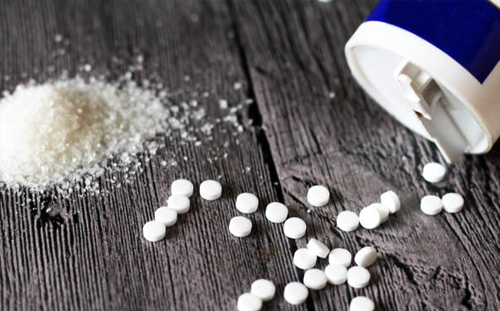
Aspartame is commonly used in a variety of low-calorie and sugar-free foods and beverages, including diet sodas, chewing gum, and yogurt. It is also used as a tabletop sweetener in packets and as an ingredient in some medications.
While aspartame is generally recognized as safe by the FDA and other regulatory agencies, it has been the subject of controversy over the years. Some studies have suggested that aspartame may be linked to a variety of health problems, including headaches, seizures, and cancer.
However, most studies have not found a significant link between aspartame and these health problems in humans. The FDA has conducted extensive reviews of the scientific literature on aspartame and has concluded that it is safe for consumption.
Some people should avoid aspartame, however, due to its components. Individuals with a genetic disorder called phenylketonuria (PKU) cannot metabolize phenylalanine and must avoid consuming aspartame or other foods containing it.
Sucralose
Sucralose is commonly used in a variety of low-calorie and sugar-free foods and beverages, including diet sodas, protein bars, and ice cream. It is also used as a tabletop sweetener in packets and as an ingredient in some medications.
Sucralose is generally recognized as safe by regulatory agencies such as the FDA and has been extensively studied for its safety. Unlike some other artificial sweeteners, it is not metabolized by the body, meaning that it is not absorbed into the bloodstream and does not contribute to caloric intake.
While some studies have suggested that sucralose may have negative health effects, most research has found it to be safe for consumption. Some people may experience digestive issues when consuming sucralose, but these effects are generally mild and not serious.
Acesulfame Potassium

Acesulfame potassium is commonly used in a variety of low-calorie and sugar-free foods and beverages, including diet sodas, energy drinks, and protein bars. It is also used as a tabletop sweetener in packets and as an ingredient in some medications.
Acesulfame potassium is generally recognized as safe by regulatory agencies such as the FDA and has been extensively studied for its safety. Like sucralose, it is not metabolized by the body and does not contribute to caloric intake.
Neotame
Neotame is a non-caloric artificial sweetener that is chemically similar to aspartame. It is about 8,000 times sweeter than sugar, making it one of the sweetest artificial sweeteners available.
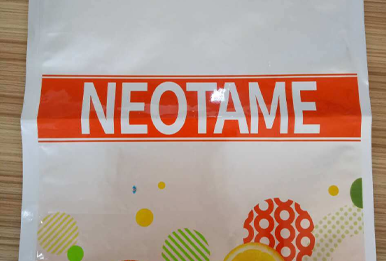
Neotame is approved for use in a variety of food and beverage products, including baked goods, dairy products, and soft drinks. It is also used as a tabletop sweetener in packets.
Like aspartame, neotame is metabolized in the body into amino acids, but the amount of neotame required to produce a sweet taste is so small that it does not contribute significant calories or affect blood sugar levels.
Neotame is considered safe for consumption by regulatory agencies such as the FDA and has been extensively studied for its safety. However, like other artificial sweeteners, some people may experience side effects such as headaches or gastrointestinal issues when consuming neotame.
Advantame
Advantame is approved for use in a variety of food and beverage products, including baked goods, dairy products, and soft drinks. It is also used as a tabletop sweetener in packets.

Like other artificial sweeteners, advantame is not metabolized in the body and does not contribute significant calories or affect blood sugar levels.
Advantame is considered safe for consumption by regulatory agencies such as the FDA and has been extensively studied for its safety. However, like other artificial sweeteners, some people may experience side effects such as headaches or gastrointestinal issues when consuming advantame.
Natural sweeteners

Natural sweeteners are sweet-tasting substances that occur naturally in plants or other natural sources. Unlike artificial sweeteners, they are not chemically synthesized, but are extracted or derived from natural sources. Here are some examples of natural sweeteners:
- Stevia: Stevia is a plant-based sweetener that is extracted from the leaves of the Stevia rebaudiana plant. It is calorie-free and is about 200-300 times sweeter than sugar. It is often used in beverages, yogurt, and other low-calorie products.
- Honey: Honey is a natural sweetener that is produced by bees from the nectar of flowers. It contains antioxidants and has been used for centuries as a natural remedy for a variety of ailments. It is often used as a natural sweetener in tea, baked goods, and other foods.
- Maple Syrup: Maple syrup is a natural sweetener that is made from the sap of maple trees. It contains antioxidants and minerals, and is often used as a natural sweetener in pancakes, waffles, and other foods.
- Agave Nectar: Agave nectar is a natural sweetener that is made from the sap of the agave plant. It is often used as a natural sweetener in beverages and baked goods.
- Fruit juice concentrate: Fruit juice concentrate is made by removing the water from fruit juice, leaving behind a concentrated sweetener. It is often used as a natural sweetener in juice, soda, and other beverages.