
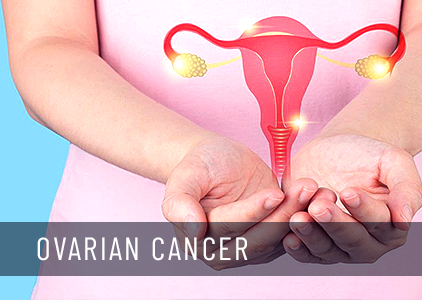
What are the 8 early warning signs of Ovarian cancer?
Ovarian cancer often has vague or subtle symptoms, and it can be difficult to detect in its early stages. However, some possible early warning signs of ovarian cancer may include:
- Abdominal bloating or swelling: Many women with ovarian cancer report feeling bloated or experiencing abdominal swelling that doesn’t go away, even after they have had a bowel movement or passed gas. This symptom can often be mistaken for weight gain or normal menstrual bloating.
- Feeling full quickly or having difficulty eating: Women with ovarian cancer may feel full more quickly than usual, even when they haven’t eaten a large amount of food. They may also experience loss of appetite or difficulty eating, which can lead to unintentional weight loss.
- Pelvic or abdominal pain: Pain in the pelvic or abdominal area is another possible early warning sign of ovarian cancer. This pain may be persistent or come and go, and it may be accompanied by bloating, nausea, or other digestive symptoms.
- Changes in bowel habits: Women with ovarian cancer may experience changes in their bowel habits, such as constipation, diarrhea, or increased frequency of bowel movements. These changes can be caused by the tumor pressing on the intestines or by changes in hormone levels.
- Increased urgency or frequency of urination: Some women with ovarian cancer may experience increased urgency or frequency of urination, particularly if the tumor is pressing on the bladder.
- Feeling tired or having low energy levels: Ovarian cancer can cause fatigue or low energy levels, which may be caused by the body’s immune response to the tumor or by the cancer’s effect on hormone levels.
- Unexplained weight loss or gain: Women with ovarian cancer may experience unexplained weight loss or gain, which can be a sign of the cancer’s effect on metabolism.
- Abnormal vaginal bleeding or discharge: In rare cases, ovarian cancer can cause abnormal vaginal bleeding or discharge, particularly if the cancer has spread to nearby tissues or organs.
Remember that these symptoms can also be caused by other conditions, so it’s important to talk to your healthcare provider if you are experiencing any of them.
What is the main cause of Ovarian cancer?
The exact cause of ovarian cancer is not fully understood, but there are several factors that may increase a woman’s risk of developing this type of cancer. Some of the main factors that have been linked to ovarian cancer include:
- Age: Ovarian cancer is more common in women who are over the age of 50.
- Family history: Women who have a family history of ovarian cancer, breast cancer, or other related cancers may have a higher risk of developing ovarian cancer. This risk is particularly high if multiple family members have been diagnosed with these cancers.
- Inherited genetic mutations: Some inherited genetic mutations, such as mutations in the BRCA1 and BRCA2 genes, can increase a woman’s risk of developing ovarian cancer.
- Hormonal factors: Factors that increase a woman’s exposure to estrogen, such as early onset of menstruation, late onset of menopause, and use of estrogen-only hormone replacement therapy, may increase the risk of ovarian cancer.
- Reproductive history: Women who have never been pregnant or who have had fertility issues may have a slightly higher risk of ovarian cancer.
- Endometriosis: Women who have endometriosis, a condition in which tissue similar to the lining of the uterus grows outside of the uterus, may have an increased risk of ovarian cancer.
It’s important to note that having one or more of these risk factors does not necessarily mean that a woman will develop ovarian cancer, and many women who are diagnosed with ovarian cancer have no known risk factors.
What are 4 the stages of cervical cancer?
The stages of cervical cancer are based on the size and location of the cancer, whether it has spread to nearby tissues or lymph nodes, and whether it has metastasized (spread) to other parts of the body. The stages of cervical cancer are as follows:
Stage 0: Also known as carcinoma in situ, this is the earliest stage of cervical cancer. The abnormal cells are confined to the surface layer of the cervix.
Stage I: At this stage, the cancer is located only in the cervix and has not spread to nearby tissues or lymph nodes.
Stage II: The cancer has grown beyond the cervix and has invaded nearby tissues, such as the vagina or the tissue surrounding the uterus, but has not spread to the pelvic wall or to the lower part of the vagina.
Stage III: The cancer has spread to the pelvic wall, the lower part of the vagina, or the lymph nodes in the pelvis.
Stage IV: The cancer has spread to other parts of the body, such as the bladder, rectum, or distant organs.
Knowing the stage of cervical cancer is important because it helps doctors determine the best treatment plan for the individual patient.
Is Ovarian cancer cancer more common than cervical cancer?
No, ovarian cancer is not more common than cervical cancer. In fact, cervical cancer is much more common than ovarian cancer. According to the World Health Organization (WHO), cervical cancer is the fourth most common cancer in women worldwide, with an estimated 570,000 new cases diagnosed in 2018. On the other hand, ovarian cancer is the eighth most common cancer in women worldwide, with an estimated 295,000 new cases diagnosed in 2018.
The reason cervical cancer is more common than ovarian cancer is partly due to the fact that cervical cancer can often be prevented through regular screening and early treatment of precancerous lesions. In contrast, there is no effective screening test for ovarian cancer, and the disease often goes undetected until it has spread to other parts of the body.
Can Ovarian cancer be prevented?

There is no surefire way to prevent ovarian cancer, but there are some steps women can take to reduce their risk of developing the disease. Here are some strategies that may help lower the risk of ovarian cancer:
- Use oral contraceptives: Studies have shown that women who use oral contraceptives (birth control pills) for at least five years have a lower risk of developing ovarian cancer compared to women who have never used oral contraceptives.
- Consider risk-reducing surgery: Women who have a high risk of ovarian cancer due to an inherited genetic mutation, such as BRCA1 or BRCA2, may choose to undergo risk-reducing surgery, such as a prophylactic bilateral salpingo-oophorectomy (removal of the ovaries and fallopian tubes), to reduce their risk of developing ovarian cancer.
- Have children and breastfeed: Women who have had one or more full-term pregnancies and have breastfed may have a lower risk of ovarian cancer compared to women who have never had children or breastfed.
- Eat a healthy diet: Eating a healthy diet that is rich in fruits, vegetables, whole grains, and lean protein sources may help lower the risk of ovarian cancer.
- Exercise regularly: Regular physical activity may also help reduce the risk of ovarian cancer.
- Talk to your doctor: If you have a family history of ovarian cancer or other risk factors, talk to your doctor about your options for monitoring or reducing your risk of the disease.
Ovarian cancer Treatment
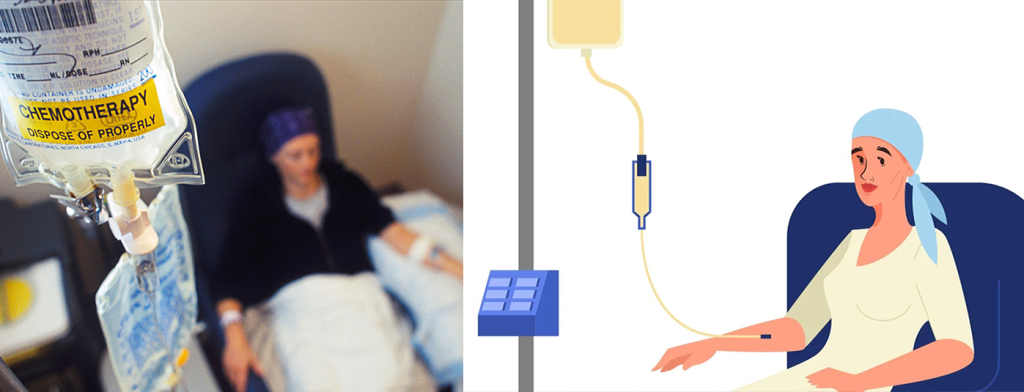
The most common treatments for ovarian cancer include:
- Surgery: Surgery is the primary treatment for ovarian cancer. It involves removing as much of the cancer as possible through surgery, which may include removing one or both ovaries, the fallopian tubes, and the uterus. In some cases, nearby lymph nodes and other tissues may also be removed. The goal of surgery is to remove all visible cancer and stage the cancer for further treatment.
- Chemotherapy: Chemotherapy is a treatment that uses drugs to kill cancer cells throughout the body. Chemotherapy may be used before or after surgery to shrink the tumor, destroy remaining cancer cells, or prevent the cancer from returning. Chemotherapy is usually given in cycles, with a period of treatment followed by a period of rest.
- Targeted therapy: Targeted therapy is a type of treatment that targets specific proteins or pathways that cancer cells use to grow and divide. Targeted therapy may be used in combination with chemotherapy to improve the effectiveness of treatment and reduce side effects.
- Hormone therapy: Hormone therapy is a type of treatment that uses hormones or hormone-blocking drugs to slow or stop the growth of hormone-sensitive tumors. Hormone therapy may be used in cases of ovarian cancer that have hormone receptors.
- Radiation therapy: Radiation therapy is a treatment that uses high-energy radiation to kill cancer cells. Radiation therapy may be used in rare cases of advanced ovarian cancer to relieve symptoms such as pain or to shrink tumors.
How long can you live with Ovarian cancer?
According to the American Cancer Society, the five-year survival rate for all stages of ovarian cancer is approximately 48%. This means that about 48% of women with ovarian cancer will survive for at least five years after their diagnosis. However, it’s important to remember that survival rates are based on statistics and do not necessarily reflect an individual’s experience.

The survival rate is generally higher when ovarian cancer is detected and treated early, before it has spread to other parts of the body. For women with localized ovarian cancer (cancer that is confined to the ovary), the five-year survival rate is about 94%. However, only about 15% of ovarian cancers are diagnosed at this early stage.
When ovarian cancer has spread to other parts of the body, the survival rate is lower. The five-year survival rate for women with regional (cancer that has spread to nearby lymph nodes or organs) ovarian cancer is about 76%, and the five-year survival rate for women with distant (cancer that has spread to distant organs or tissues) ovarian cancer is about 30%.
It’s important to remember that survival rates are based on large groups of people and do not predict how an individual will respond to treatment. Many factors can affect an individual’s prognosis, including their age, overall health, the type and stage of the cancer, and how well they respond to treatment.
Ovarian cancer and pregnancy
Ovarian cancer can occur during pregnancy, although it is rare. Women who are pregnant may have a slightly increased risk of developing ovarian cancer compared to women who are not pregnant. However, the overall risk of ovarian cancer during pregnancy is still very low.
Symptoms of ovarian cancer can be similar to symptoms of pregnancy, such as abdominal bloating, nausea, and fatigue. This can make it difficult to diagnose ovarian cancer during pregnancy, and some women may not receive a diagnosis until after the pregnancy is over.
Treatment of ovarian cancer during pregnancy depends on the stage of the cancer and the stage of the pregnancy. In some cases, surgery to remove the cancer may be possible without harming the developing fetus. In other cases, chemotherapy or radiation therapy may be necessary to treat the cancer, but these treatments can also pose a risk to the fetus.